
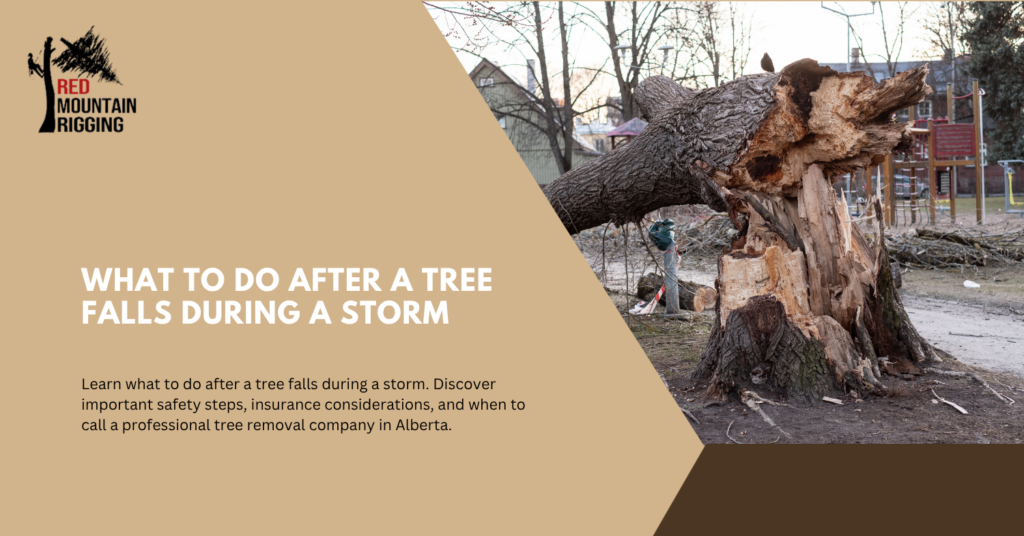
Storms can strike without warning, leaving behind significant property damage and safety hazards. High winds, heavy snow, freezing rain, and saturated soil can all contribute to tree failures throughout Alberta. Whether a tree has fallen across your driveway, landed on a structure, or is hanging precariously after a storm, knowing what to do next can help protect your property and keep everyone safe.
While it may be tempting to begin cleanup immediately, storm-damaged trees often present hidden dangers. Understanding the proper steps to take after a tree falls can help prevent injuries and ensure the situation is handled safely and efficiently.
The first and most important step after a tree falls is ensuring everyone’s safety. Fallen trees can create unstable conditions that may not be immediately obvious. Broken limbs under tension, cracked trunks, and damaged root systems can shift unexpectedly, creating serious hazards.
Keep family members, employees, and visitors away from the affected area until it has been properly assessed. If the tree has fallen near power lines, assume the lines are energized and stay well clear of the area. Contact your utility provider immediately and wait for qualified personnel to address the situation.
Even if the tree appears stable, avoid climbing on it or attempting to remove branches yourself. Storm-damaged trees are unpredictable and often require specialized equipment and training to remove safely.
Once the immediate area is secure, take time to assess the extent of the damage. Look for:
Photograph the damage from multiple angles if it is safe to do so. These images can be helpful when filing insurance claims or documenting the condition of the property before cleanup begins.
Avoid walking underneath hanging branches or approaching trees that appear partially uprooted. These trees may still be under significant stress and can fail without warning.
If the fallen tree has caused damage to your home, business, vehicle, fence, or other insured property, contact your insurance provider as soon as possible.
Many insurance companies will request:
Prompt reporting can help speed up the claims process and ensure that emergency work is properly documented.
If emergency tree removal is required to prevent further damage, keep all invoices and records for insurance purposes.
Many property owners underestimate the risks associated with storm-damaged trees. Chainsaws, elevated branches, unstable trunks, and damaged root systems can create extremely dangerous working conditions.
A fallen tree may contain limbs under tension that can spring unexpectedly when cut. Trees resting on structures or other trees often require specialized rigging techniques to remove safely without causing additional damage.
Professional tree removal crews have the equipment and experience needed to safely assess and dismantle storm-damaged trees while minimizing risks to people and property.
Attempting to handle large tree removals without proper training can result in serious injuries, property damage, or costly mistakes.
The tree that has fallen may not be the only concern after a storm. Strong winds and heavy weather events can weaken other trees throughout your property.
Signs that additional trees may require inspection include:
A professional tree assessment can help identify hidden structural issues before another failure occurs.
Storms often expose weaknesses that may have gone unnoticed for years. Following a significant weather event, a tree assessment can help determine whether surrounding trees remain safe and structurally sound.
Professional assessments can identify:
Addressing these concerns early can prevent additional damage and reduce long-term maintenance costs.
For commercial properties, acreage owners, and residential homeowners, proactive inspections are one of the most effective ways to improve safety following a storm.
Storm cleanup involves more than simply cutting up a fallen tree. Every situation presents unique challenges depending on the tree’s size, location, condition, and the damage involved.
Professional storm response services can provide:
With specialized equipment and experienced crews, professional tree services can restore safety and help prevent further damage following severe weather events.
Throughout Alberta, trees are regularly exposed to challenging weather conditions. Heavy snow accumulation, Chinook winds, spring storms, and summer wind events can all increase the risk of tree failure.
Regular tree maintenance, pruning, and risk assessments can help reduce the likelihood of storm-related damage while improving the long-term health and stability of your trees.
If a tree has fallen on your property or you’re concerned about storm-damaged trees, acting quickly can help prevent additional hazards and costly repairs.
When storms leave behind fallen or hazardous trees, Red Mountain Rigging provides safe, professional tree removal and assessment services throughout Alberta. Our experienced team can evaluate storm damage, remove dangerous trees, and help restore safety to your property.
Contact Red Mountain Rigging today to request a tree assessment or emergency storm cleanup service.
Phone: (825) 945 8733
Email: Redmrig@outlook.com
We would love to speak with you!