
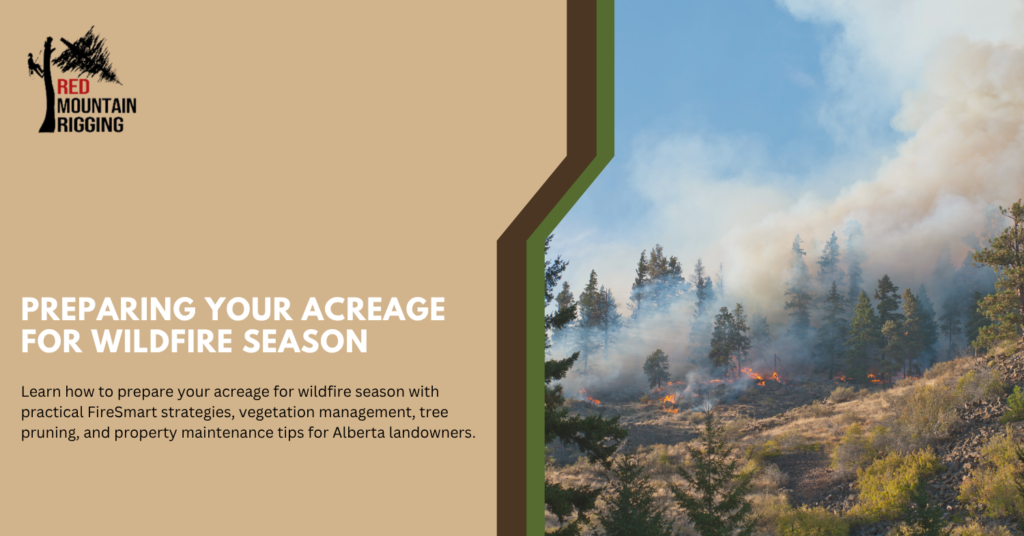
Wildfire season has become an increasing concern for acreage owners across Alberta. As communities continue to experience hotter, drier conditions and longer fire seasons, rural property owners are taking a more proactive approach to protecting their homes, outbuildings, and land.
While no property can be completely wildfire-proof, proper planning and maintenance can significantly reduce the risk of fire damage. By implementing FireSmart practices and maintaining vegetation around structures, acreage owners can create defensible space that helps slow the spread of wildfire and improves the chances of property survival during an emergency.
Whether you own a small rural property or a large acreage surrounded by trees and natural vegetation, preparing before wildfire season arrives is one of the most important investments you can make.
Many acreage properties are located near forests, grasslands, river valleys, or other natural landscapes that can act as fuel during a wildfire. Wind-driven fires can spread quickly across these environments, carrying embers significant distances ahead of the main fire front.
One of the biggest misconceptions among property owners is that a wildfire must directly reach a structure to cause damage. In reality, airborne embers are often responsible for igniting homes, sheds, decks, and other buildings.
Reducing fuel sources around your property can help limit opportunities for fire to spread and increase the effectiveness of firefighting efforts if a wildfire occurs nearby.
Defensible space refers to the area surrounding a structure where vegetation and combustible materials are managed to reduce wildfire risk. This space helps slow approaching fires and creates safer working conditions for emergency responders.
Start by focusing on the area immediately surrounding your home, garage, shop, or outbuildings. Remove unnecessary combustible materials such as:
Keeping these materials away from structures reduces the likelihood that embers will ignite nearby fuel sources.
Regular maintenance throughout the year is often more effective than attempting large-scale cleanup projects immediately before wildfire season.
Trees can play a significant role in wildfire behaviour, particularly when low branches allow fire to climb from ground vegetation into the canopy.
Professional tree pruning helps reduce ladder fuels by removing lower branches and improving spacing between trees. This can make it more difficult for fires to spread vertically and move through wooded areas.
Benefits of wildfire-focused tree pruning include:
Proper pruning should always be performed according to industry standards to avoid damaging the tree or creating long-term health issues.
Dead and declining trees can become highly combustible during dry conditions. They often contain large amounts of dry material that can accelerate fire spread and increase heat intensity.
In addition to wildfire concerns, dead trees may pose safety risks due to falling limbs or structural instability.
A professional tree assessment can identify:
Removing hazardous trees before wildfire season can improve both safety and property resilience.
Trees are only one part of wildfire prevention. Dense brush, tall grass, and unmanaged vegetation often provide the fuel that allows fires to spread rapidly across rural properties.
Vegetation management strategies may include:
For larger properties, acreage clearing and mulching services can help manage vegetation efficiently while minimizing environmental impact.
Mulching is an effective way to manage woody debris and reduce fuel loads without hauling large quantities of material off-site.
Using specialized equipment, unwanted brush, small trees, and vegetation can be processed into mulch that remains on the property. This approach can:
Mulching is particularly beneficial for larger acreages and properties undergoing FireSmart improvements.
During an emergency, clear access can make a significant difference for both evacuation and firefighting operations.
Review driveways, access roads, and property entrances to ensure they remain clear of overgrown vegetation and low-hanging branches. Emergency vehicles often require adequate space to access rural properties safely.
Consider whether:
Maintaining accessible routes can improve emergency response times and overall property safety.
Every acreage property presents unique challenges based on vegetation type, terrain, surrounding forest conditions, and property layout.
A professional assessment can help identify high-risk areas and prioritize improvements that provide the greatest benefit. Experienced tree care professionals can evaluate:
This proactive approach allows property owners to address concerns before wildfire season intensifies.
Protecting your acreage from wildfire is not a one-time project. Vegetation continues to grow, trees age, and environmental conditions change from year to year.
Regular inspections, pruning, tree removal, and vegetation management help maintain a safer property while reducing long-term wildfire risks. By taking action early, acreage owners can improve property resilience and gain peace of mind throughout wildfire season.
Red Mountain Rigging helps acreage owners throughout Alberta prepare for wildfire season with professional tree removal, tree pruning, acreage clearing, mulching, hazardous tree assessments, and FireSmart vegetation management services.
Whether you need a property assessment, fuel reduction work, or assistance creating defensible space around your buildings, our experienced team can help you prepare your acreage for the challenges of wildfire season.
Contact Red Mountain Rigging today to schedule a FireSmart assessment and protect your property before wildfire season arrives.
Phone: (825) 945 8733
Email: Redmrig@outlook.com
We would love to speak with you!